


In this issue of PR Futurist we look at:
PRCA conference keynote on “How do you maintain excellence when AI is a stakeholder?”
Keeping it real on the PR in the Real World podcast talking about AI as a stakeholder and why it matters more than simple GEO or AEO
The future of government and political comms in the AI era
Onclusive On The Road: Your Brand Has Entered The (AI) Chat
Can AI write as well as Hemingway, Poe, McCarthy, and Faulkner?
Investors say LinkedIn visibility is more important than media appearances
Latest Microsoft Copilot changes and how they help with PR and comms
Build apps with Copilot Cowork or Copilot Studio
AI Signal Boost - a regular new section with short snippets of essential news.
PRCA conference: How do you maintain excellence when AI is a stakeholder?
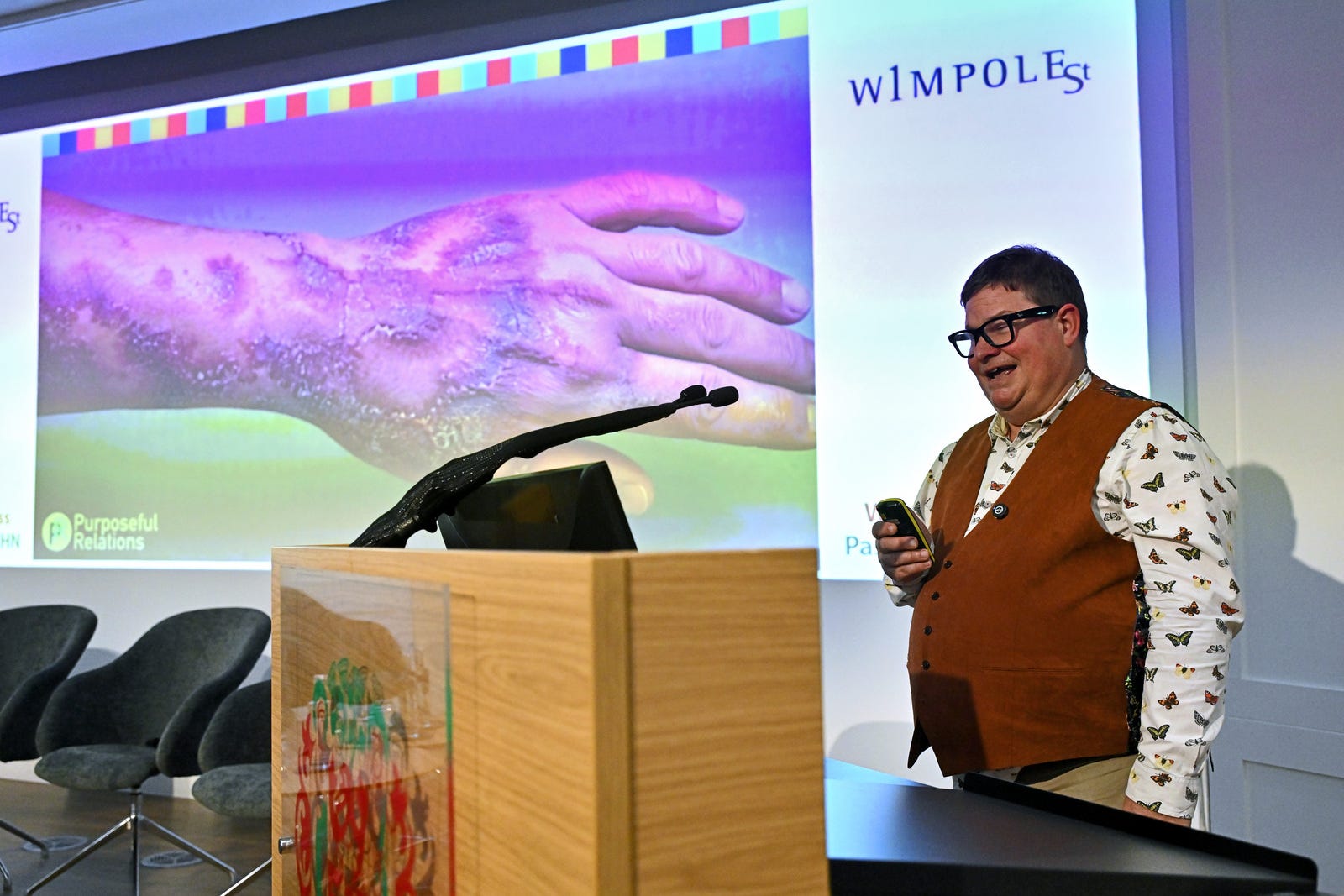
Last week I spoke at the PRCA UK + PA conference. My keynote tied into the day’s overall theme of excellence and asked: ‘How do you maintain excellence when AI is a stakeholder?’. I warned that AI can rapidly turn fiction into apparent fact, making reputation more fragile and fast-moving.
I also robustly challenged the hype surrounding generative engine optimisation. Generic vendor claims about which sources dominate AI answers are no substitute for an organisation’s own audit: Purposeful Relations’ work for clients has found owned and institutional media can sometimes be ahead of earned media. It also shows the fallacy of relying on a single tool as results vary significantly between monitoring and measurement tools.
I explained the practical response is governance, evidence and action. Communications leaders should take board-level ownership, audit against AMEC’s GEO Principles, integrate findings into strategy and avoid relying on a single dashboard. Agencies must build robust methodologies, upskill whole teams and sell judgement rather than software. The greatest risk is not AI replacing communicators, but communicators repeating the mistakes made with search and social by waiting while the landscape changes.
I’ve done a longer write up about it on the PRCA website.
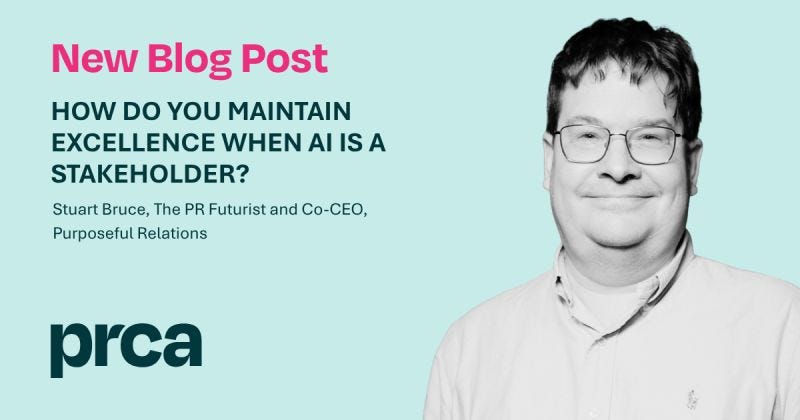
Keeping it real on the PR in the Real World podcast
A couple of weeks ago I was interviewed by Tony Garner, the founder of Viva PR, for its PR in the Real World podcast. We covered everything from AI as a stakeholder and GEO to why AI means many crisis comms plans aren’t fit for purpose and how I helped introduce Andy Burnham to social media. Watch the full video and let me know what you think.
The future of government and political comms in the AI era
The Institute for Government has published an excellent article by Steph Driver, one of several No 10 directors of communications under Keir Starmer, looking at how media ecosystems have changed and what this means for political and government communications.
It is a thought-provoking article. However, what struck me wasn’t so much what was in it, as what wasn’t in it. It does an excellent analysis of the past and the present but doesn’t focus sufficiently on the future.
The big missing element is AI as a stakeholder. This is already incredibly important and will only become more so. Don’t be misled by the hype about GEO (generative engine optimisation) as many of the claims and statements can rightly be dismissed as hype or are fundamentally misleading. That shouldn’t disguise the fact that AI is fundamentally changing how people view and understand the world.
At Purposeful Relations we’re already talking to arms-length bodies about helping them understand how they must adapt their communications strategies, plans and tactics. But this must happen right across Government Communications and at every level in government.
The most urgent is the need for the spads and political communicators in every department to understand what AI as a stakeholder really means and what to do about GEO.
Andy Burnham gets the need for straight-to-viewer and direct-to-camera video. But that’s about being brilliant about how to communicate today. There is more to think about to continue to win in the 2027 local elections, 2028 mayoral elections and 2029 general election.
Onclusive On The Road: Your Brand Has Entered The (AI) Chat

Onclusive on the Road is back in the North this Autumn for some real talk with PR, comms and marketing pros about the good, the bad of the industry and, of course, the AI. What’s going on with GEO and brand referencing?
I’m one of the speakers alongside Darryl Sparey, MD of Hard Numbers; Lucy Hall, CEO of SocialDay; Claire Melly and Jack Richards of Onclusive, and many more.
It is from 6:00 to 0:00 PM on Thursday 15 October at Clockwise, Linley House, Manchester.
As it’s an evening event Onclusive is even putting on drinks afterwards so we can stay and mingle. Spaces are limited, so register now.
Can AI write as well as Hemingway, Poe, McCarthy, and Faulkner?
What happens when you ask five flagship AI models — Google’s Gemini 3.1 Pro, OpenAI’s GPT-5.5, Anthropic’s Claude Fable 5 and Claude Opus 4.8, and DeepSeek V4 — to write one paragraph each in the styles of four great writers? This tests them with: Hemingway, Edgar Poe, McCarthy, and Faulkner. The prompt was to write a paragraph of 100–150 words on the theme "A man waits for a train."
The Silent Room reveals all.
Investors say LinkedIn visibility is more important than media appearances
New research reveals investors now see a strong LinkedIn presence as more important than most traditional media appearances. In a survey of 300 institutional investors FTI Consulting found that 42% said LinkedIn visibility is essential for business leaders, ranking it ahead of trade media, corporate websites and earnings calls. LinkedIn was second only to financial media interviews and investor conferences. The findings suggest that executive thought leadership and regular engagement on professional social platforms are increasingly influential in shaping investor perceptions and corporate credibility.
The FTI study [PDF] also underscores the growing business value of executive reputation. Investors rated reputation, credibility, transparency and authenticity almost as highly as financial discipline and strategic vision, with many viewing executive reputations as a critical corporate asset. Nearly nine in ten investors said they scrutinise the alignment between executive messaging and company actions more closely than they did five years ago, while three-quarters said they would assign a valuation premium to companies led by highly trusted and credible executives. The research reinforces the idea that executive visibility, authenticity and consistency are no longer simply communications considerations but significant drivers of business value and investor confidence.
Purposeful Relations’ own research has shown that executive visibility and activity on LinkedIn is an important element in influencing AI answers to prove their credibility.
Latest Microsoft Copilot changes and how they help with PR and comms
Microsoft is developing and rolling out changes and improvements to Copilot so quickly it’s impossible for most people to keep track. These are some of the latest changes and what we think they mean for PR and comms.
Short prompts can be added straight from the Copilot button in Word, PowerPoint and other apps, making it quicker to get help without interrupting a user’s chain of thought.
Copilot’s new cost controls give organisations better visibility and governance of AI spending through alerts, reporting and policy management. For PR and communications teams, that means easier AI adoption, but greater pressure to track usage, control costs and prove business value.
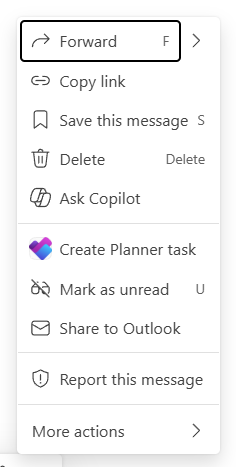
Teams will have a new ‘reminder’ feature for personal message reminders for chat and channel messages, so users can turn conversations into actionable follow-up tasks. I’m not sure why this is needed as you can already turn a message into a Planner task by clicking on the ellipsis (three dot menu) or right clicking.
Outlook for Mac will soon be able to automatically recommend or apply Microsoft Purview sensitivity labels to emails based on the labels assigned to attached documents, helping users classify messages more accurately. The update should improve security and compliance while reducing the manual effort and errors associated with email labelling.
By the end of September will have rolled out uploading custom presentation skills to Brand Kit so they are shared across the organisation for use with Copilot in PowerPoint. It needs an approved brand manager to set it up but then everyone using Copilot in PowerPoint benefits from consistent, organisation-approved guidance built into their presentations.
Build apps with Copilot Cowork or Copilot Studio
Clients often read about people vibe coding apps and ask us if they can do the same in Copilot. Too often the answer was no and that they shouldn’t use a third-party app which was outside their governance and security environment.
Now Microsoft Copilot enables people who could never write code to describe an idea and generate a working application in minutes. All while remaining within their trusted enterprise platform. Apps built with Cowork or Studio can use WorkIQ to safely and securely connect with sensitive enterprise data.
Talk to us if you want support doing this for your team.
AI Signal Boost
Short snippets to keep you informed of the latest news and research impacting public relations, communications and corporate affairs.
New crisis comms for boards handbook
In partnership with the Institute of Directors (IoD) the CIPR has published Crisis Communications for Boards: A Handbook for Good Governance. The handbook examines what constitutes a crisis, the potential impact on an organisation, and best practice in communications at each stage of the crisis lifecycle. It advises boards on how to predict, protect, prepare, respond, recover, and build enduring resilience.
How journalists investigate artificial intelligence
In this edition of Steph Spyro’s Off The Record, Effie Webb, AI reporter at The Bureau of Investigative Journalism, share top tips about what she and other reporters look for when writing about AI and Big Tech. These are the questions comms teams should be asking themselves. Effie shares the responses that don’t help when a journalist comes knocking.
How an AI-powered news site scooped human journalists
You probably saw the story about rogue OpenAI models hacking Hugging Face, but did you know the story broke on an AI-powered news site? RuntimeWire was the first to publish, beating Wired (the second) by three hours.
Health charities hit hard by Google AI answers
Press Gazette reports that charities are seeing rapidly declining web traffic as readers get information from AI-generated answers rather than trusted expert sources.
Health charities have been particularly hard hit as patients seeking information about their conditions are presented with extensive AI-written summaries that push links to websites far down search engine results pages.
Study finds AI fundraisers three times more effective than professional fundraisers and beats competitive debaters
UK researchers have found that the AI model Claude was nearly three times as effective at getting donations [$ Washington Post] for Save the Children as a group of professional fundraisers. In a separate study AI models outperformed elite competitive debaters by 4.6 percentage points.