


In this issue
AI and innovation with Simon Baugh CBE, former CEO of the UK Government Communication Service (GCS) - write-up of Purposeful Relations’ invitation-only breakfast.
Purposeful Relations is one of the first to adopt AMEC’s new GEO Principles.
Keynote speech on AI as a stakeholder at the Public Relations Institute of Ireland annual national conference in Dublin.
Singapore’s minister explains how he uses his AI second brain.
Speaking at in-person panel for Vuelio on how AI is changing the way we communicate: Balancing AI efficiency with human authenticity in PR.
Webinar for the PRCA on AI, Reputation and Risk: A Procurement Perspective.
AI shoots up the rankings in Rod Cartwright’s excellent new Reputation, Risk and Resilience 2026 report.
AI hallucinations in consultancy reports. Again. This time it’s EY.
Top five corporate affairs newsletters - Yippee! PR Futurist is one of them.
LinkedIn cracks down on AI slop.
Exploring AI in comms with Simon Baugh CBE
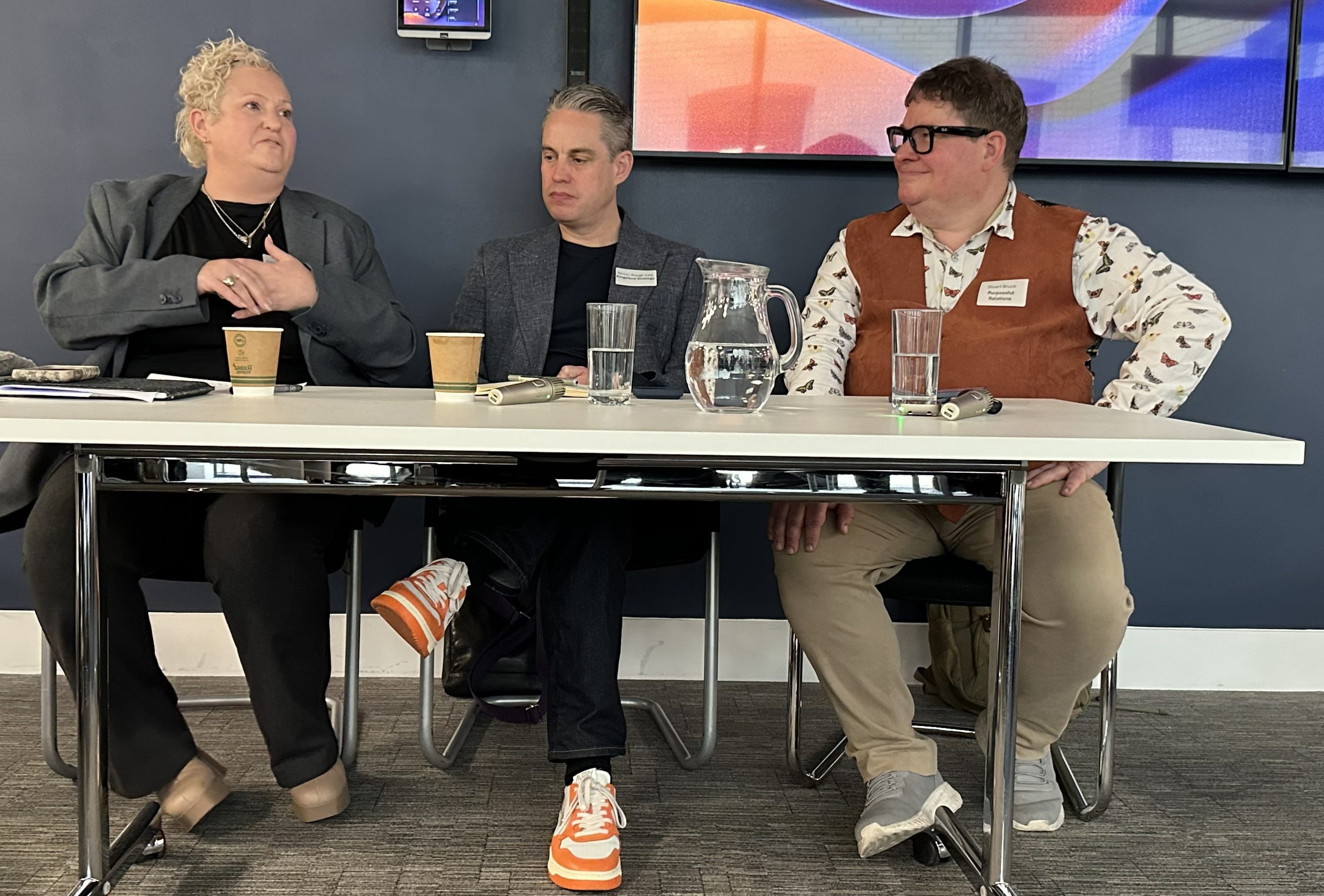
Earlier this month Purposeful Relations hosted an invite-only executive breakfast with Simon Baugh CBE, the former CEO of the Government Communication Service (GCS). The fireside chat was kindly hosted by our client the Chartered Society of Physiotherapy (CSP) and the Community Rehab Alliance.
The fireside chat with Simon and me was conducted by the CSP’s Sara Hazzard, who is also co-chair of the Community Rehab Alliance. The guests included communication leaders from the private, third and public sector. Sara’s insightful questions helped Simon and me cut through the usual AI hype.
The conversation focused on how communications leaders need to modernise how they work because the environment around them has already changed. Drawing on his experience leading the Government Communication Service through the pandemic, the death of Queen Elizabeth II and Russia’s invasion of Ukraine, Simon argued that the old model of communications is no longer enough. Audiences are fragmented, channels are multiplying and the skills communicators need are shifting fast. His response was to focus on three priorities: partnership, skills and innovation.
There is a long-read article about the discussion on the Purposeful Relations website.
Purposeful Relations is one of the first to adopt AMEC’s new GEO Principles
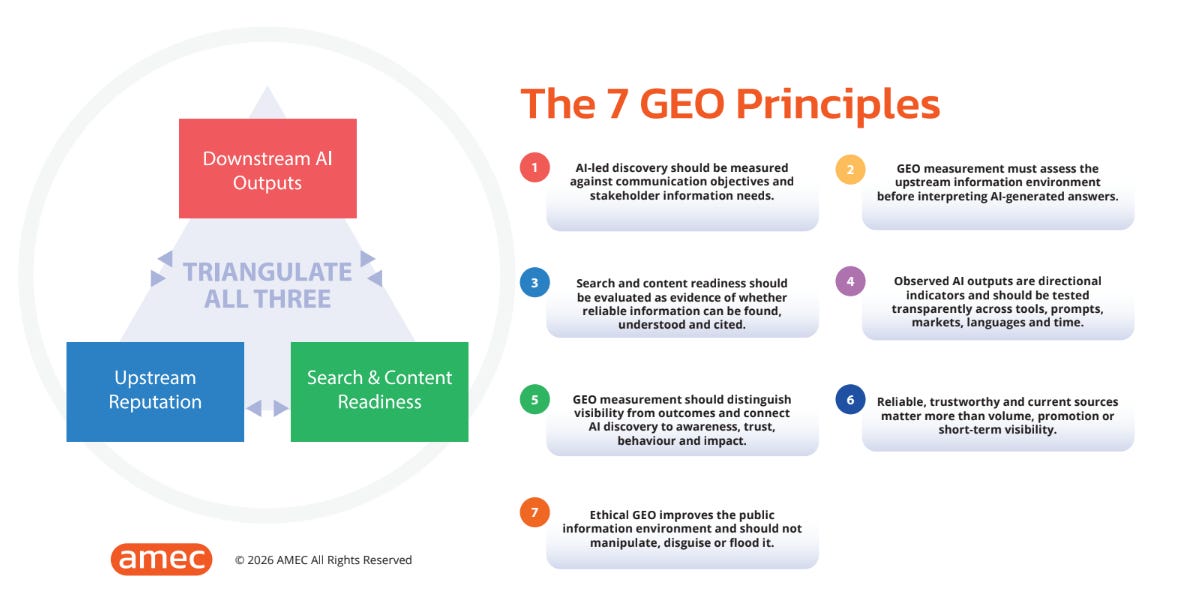
Purposeful Relations is one of the first to adopt AMEC’s new GEO Principles which were launched this week (20 May) in Dublin at the AMEC Global Summit. They are designed to help communications professionals measure the growing influence of AI-led discovery, generative search and large language models. Purposeful Relations’ AI as a Stakeholder framework already complies with the new GEO Principles.
There is already huge interest in GEO/AEO from CCOs and agencies so if you want support to assess how your organisation is represented in AI and to build a practical AI as a stakeholder GEO/AEO strategy then please arrange a call.
If you find PR Futurist useful then please help me by sharing with your colleagues.
The impact of AI and humanity on communications
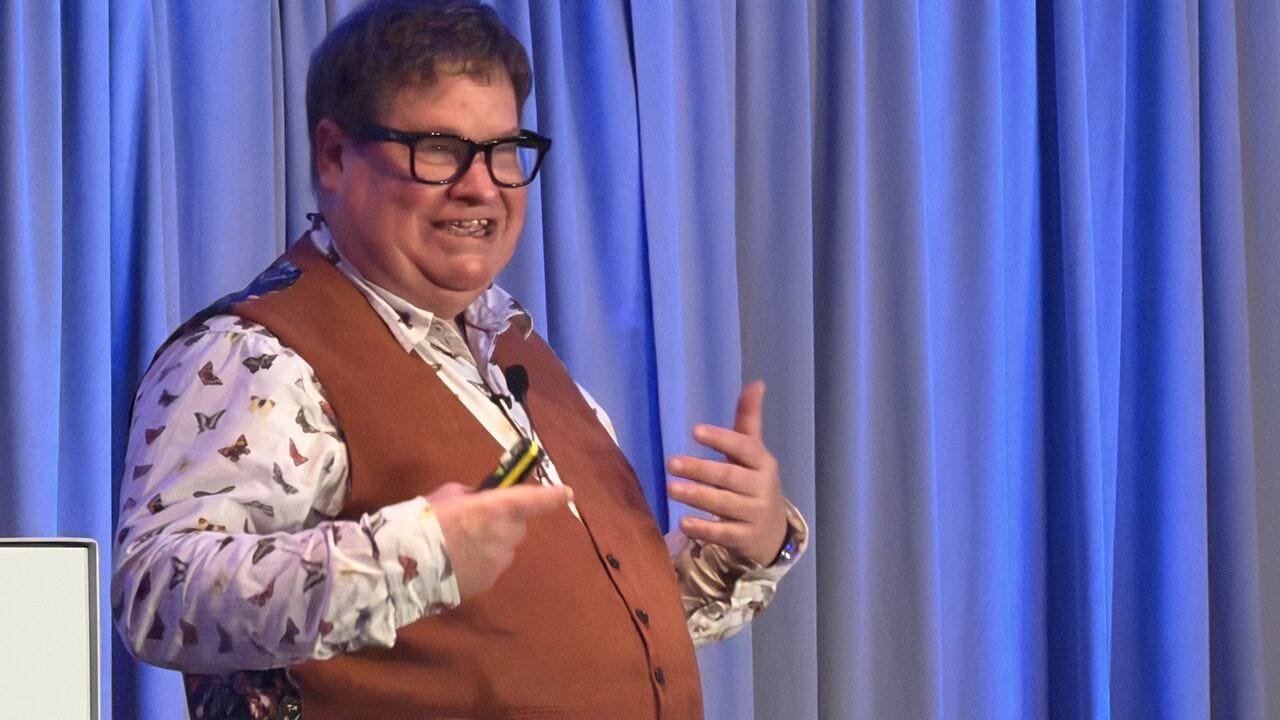
The Public Relations Institute of Ireland (PRII) held its annual national conference at Croke Park last week. It didn’t fill all 82,000 seats of Western Europe’s fourth largest stadium but it did attract an audience of more than 200 from Ireland’s top in-house communications teams (private, public and third sector) and PR agencies.
I was honoured to deliver the opening keynote on 'From search to answers: Why AI has become a communications stakeholder?' Judging by the number of questions, there was lots of interest.
BusinessPlus has already published an article. There are lots of LinkedIn posts with summaries and round-ups including Jack Murray (founder and CEO of MediaHQ), Dioreann Nic Dhonncha, Tatiana Sorohan and Fenton Fitzwilliam.
Singapore’s minister explains how he uses his AI second brain
In the last issue I told you about Dr Vivian Balakrishnan, Singapore’s Minister for Foreign Affairs, who built his own second brain. In this video of a conference speech he talks about how he did it - just by assembling and connecting tools, without even AI-assisted vibe coding . More importantly he explains how he uses it and the benefits it provides. It’s worth 15 minutes of your time to watch this video.
How AI is changing the way we communicate: Balancing AI efficiency with human authenticity in PR
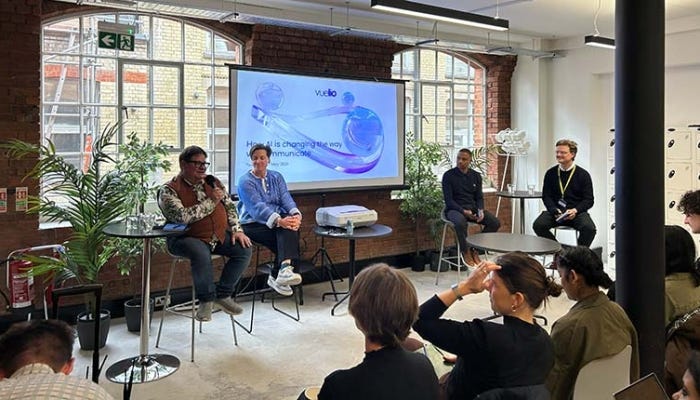
Last week I also participated in an in-person event for Vuelio with 60+ senior communicators from in-house and agencies. One fellow panellist was Nicole Yost, Director of Communications and Corporate Affairs at the British Heart Foundation (BHF), provided the in-house viewpoint, sharing how a major charity balances the efficiency of AI with the critical need for trust in healthcare. The other was Tshepo Tshabalala, Manager and Team Lead at JournalismAI (LSE), who brought a global perspective on how newsrooms are responsibly implementing AI.
It was a fascinating and informative discussion with lots of questions. Part of my contribution was:
‘Communications is standing on a precipice. Historically, we have not been an innovative industry. Both the scale and the speed of AI adoption needs to be a lot faster. AI is impacting you because organisations around you are using it — your competitors, your peers, your users, your customers. If you’re not understanding those shifts that are happening in society, in the economy, you are going to be left behind. We’ve got to get our act together quickly.’
PRCA AI, Reputation and Risk: A Procurement Perspective webinar
Earlier this week I did a webinar for the PRCA based on CEO Sarah Waddington’s letter to procurement leaders explaining why public relations and communications professionals are best placed to provide GEO and AEO support.
AI shoots up the rankings in Reputation, Risk and Resilience 2026 report
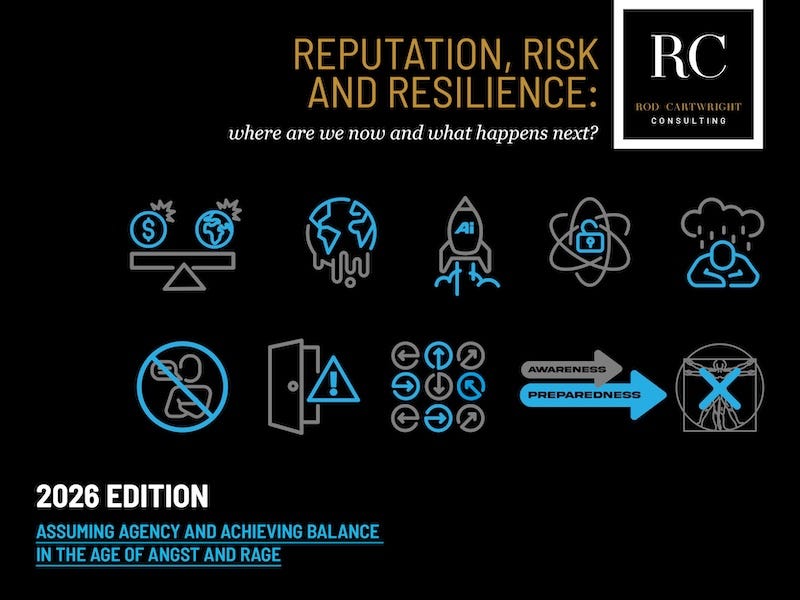
Rod Cartwright’s 2026 edition of Reputation, Risk and Resilience arrives at the right moment. Communication leaders are dealing with volatility, distrust and fatigue. We do not need another report telling us the world is messy. We know. What we need is help making sense of it. This report does that.
What this year’s report finds is that AI has shot up the rankings. Rod’s overall conclusion is that confidence in AI adoption and impact lags behind ambition. This reflects what we see when speaking to prospects.
The beauty of Rod’s report isn’t just that he’s read all the major reports on risk and reputation, so we don’t need to, but that his thought-provoking analysis provides actionable insight. Rod has read, analysed and summarised the 12 major reports (nearly 850 pages!) that most of us download and intend to read later, but never quite get round to reading them all.
My favourite part is the letter to the CEO and Chair from Ms Dee Risk, a fictional corporate affairs director. It is clever, pointed and uncomfortably familiar. It captures the pressures of the role better than another abstract model ever could.
I’ve written a full review on my blog.
AI hallucinations in consultancy reports
Another day, another example of AI scaremongering.
AI hallucinates. It makes stuff up. That’s a fact.
It also does short sentences, does stuff in threes and uses emojis, but those sentences and this emoji are 💯 Stuart.
This article by Chris Stokel-Walker shares examples of big consultancy firms creating reports with AI hallucinations - stuff AI has made up.
Ironically Chris starts with an annual EY report “Points of Attack: Uncovering Cyber Threats and Fraud in Loyalty Systems” where the resources section is riddled with hallucinations and citations of sources that don’t exist.
This shouldn’t be seen as an indictment of AI, but rather an indictment of the big consultancy firms failing to use AI properly. Doubtless EY has an AI policy that stresses the need to always check AI outputs. Apparently its highly paid consultants didn’t do that.
That’s why AI policies aren’t enough. Policies are only part of a governance framework. It also needs training, support and auditing. The irony is that EY advises its own clients on the governance it can’t do itself.
The most effective way to reduce the risk in your organisation is to have a properly resourced plan for generative AI adoption which includes policies and training.
Top five corporate affairs newsletters
Thanks to Adam Joseph, founder and CEO of Clipbook, for including PR Futurist in his list of the “top five corporate affairs newsletters every pro should have in their inbox.”
It’s awesome to be on the same list as PRovoke Media and the Page Society’s PageViews! The other two are by Stephen Waddington and Brendan Hodgson from Burson.
Of course there are lots of other great newsletters, but one I’d add is Cut Through! by Simon Baugh CBE.
I subscribe to far more newsletters and podcasts than I read or listen to. I usually dip in and out depending what’s in them each week. Simon’s is one of the few I always read. Sometimes it provides valuable affirmation that I’m doing and saying the right things. Other times it provides me with new ideas and inspiration. Both are invaluable.
If you are enjoying PR Futurist and find it useful, I’d be so grateful if you could share it with your friends and colleagues. Thank you. 🙏
LinkedIn cracks down on AI slop
LinkedIn has announced it is cracking down on ‘AI slop’ by suppressing AI-generated posts and comments. Posts flagged as AI-generated by its new detection system will not be removed, but will be suppressed from recommendations.
Laura Lorenzetti, LinkedIn’s vice president of product, said: “At a time when more people need help navigating work, it’s more important than ever that people can learn from real voices, authentic perspectives, and lived expertise,” she added that the ultimate value of posts “comes from the human behind the tool”.
However, LinkedIn still offers its own “Rewrite with AI” feature in its post composer.
My take is that this is a good thing. We don’t want LinkedIn feeds filled with superficially polished content. We need authentic, opinionated content from real people with experience and perspective.
LinkedIn is still allowing AI-enhanced content, including its own “Rewrite with AI” feature. This is good. Professional communicators can create excellent content without AI assistance. Most people can’t. For them, AI democratises content and makes it possible for them to express their ideas and opinions more fully.
Alongside the rightful backlash against AI slop, there is also a lot of snobbery and protectionism from those that are good writers. I don’t want to go back to silencing people with good ideas, simply because they aren’t good writers.