


In this issue
The Economist creates one page for humans and another for AI
Experts say Andy Burnham is a natural on social media - it wasn’t always so
New cabinet minister warns that not using AI in public services would mean “choosing decline”
New research strengthens AI as a stakeholder concept
Pope publishes important paper on AI
Why should you think of GEO for AI like a map?
PRCA launches Innovation Working Group supported by Purposeful Relations
Copilot AI continues to improve for PR and comms professionals
CIPR publishes new guidance on AI and digital ethics for internal communications
The Economist creates one page for humans and another for AI
The Economist is experimenting with creating AI-readable versions of its content that sit outside its paywall. Alongside its pages written for humans it is creating pages designed to be read by AI bots and agents.
Digiday reports that the human version is visual and attractive designed for easy reading. The AI version is utilitarian and structured into AI-friendly formats such as Q&As.
It isn’t real editorial content, but mainly marketing and sales content.
I spoke at an event recently where one of the attendees, who led PR, communications and marketing at a membership body, was grappling with getting the right balance between its paywall content for members and being cited as an expert, reliable source by AI.
New ChatGPT app
The Economist has also become the first major consumer news publication to launch its own ChatGPT app. It’s experimental and limited at the moment. “The Economist – Graphs” runs natively inside ChatGPT and allows users to interact with the publication’s data visualizations. At launch that’s just U.S. polling data. You can use it to ask questions about The Economist’s ongoing Donald Trump approval rating tracker, which offers a variety of charts and data points broken down by state, demographic, and voting issue.
Experts say Andy Burnham is a natural on social media - it wasn’t always so
The Guardian reports that Labour MPs and PR experts say Andy Burnham is a “natural” on social media, in stark contrast to Keir Starmer. It wasn’t always so.
The piece brought back memories as I was Director of Comms for the start of Andy’s first leadership campaign in 2010. One of my first challenges was Andy’s challenging relationship with Twitter.
In 2009, while Secretary of State for Culture, Media and Sport, in Gordon Brown’s government he was often criticised for a claimed lack of understanding of the internet and social media. As a result of one of his interviews well-known tech journalist Mike Butcher claimed the @andyburnhammp Twitter handle to use as a parody account.
One of my first jobs was to successfully persuade Mike to relinquish control so Andy could start using it. The next challenge is we were starting from scratch so needed to bring Andy quickly up to speed on how to use social media.
It didn’t take too long before the Twitter account was about all three of his passions - music, football and politics. Possibly in that order.
Today Andy’s X account includes snarky, humorous retorts and passive aggressive thumbs-up emojis to respond to critics. His daily campaign update videos are delivered unscripted with humour and authenticity. This one is shot in his campaign HQ, which just happens to have a bar, because it’s in a social club, so of course Andy has a cheeky pint at the end of a very busy day.
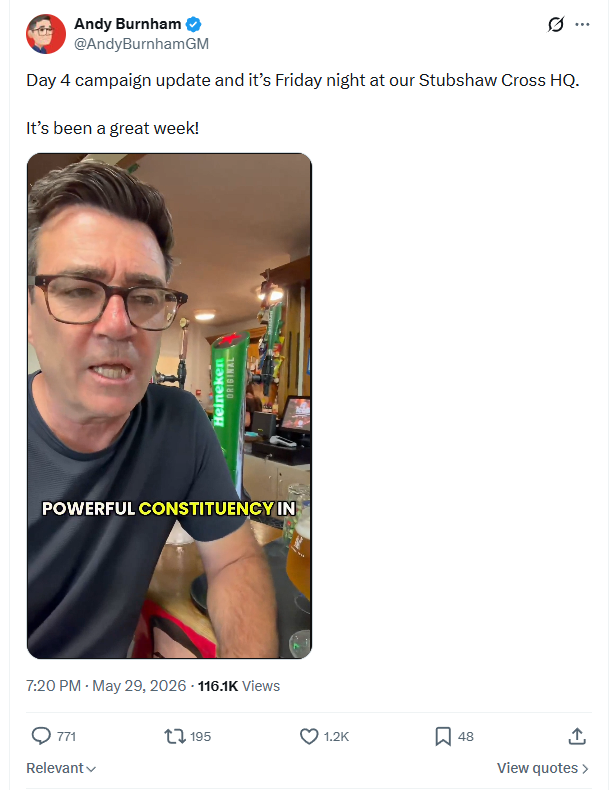
Today, Andy’s social media use is entirely natural and authentic. It’s a fantastic example that CEOs and other senior leaders can learn from.
There’s still scope for improvement as he still needs to grow his TikTok, Instagram and YouTube presence. But the quality of the content is cracking.
New cabinet minister warns that not using AI in public services would mean “choosing decline”
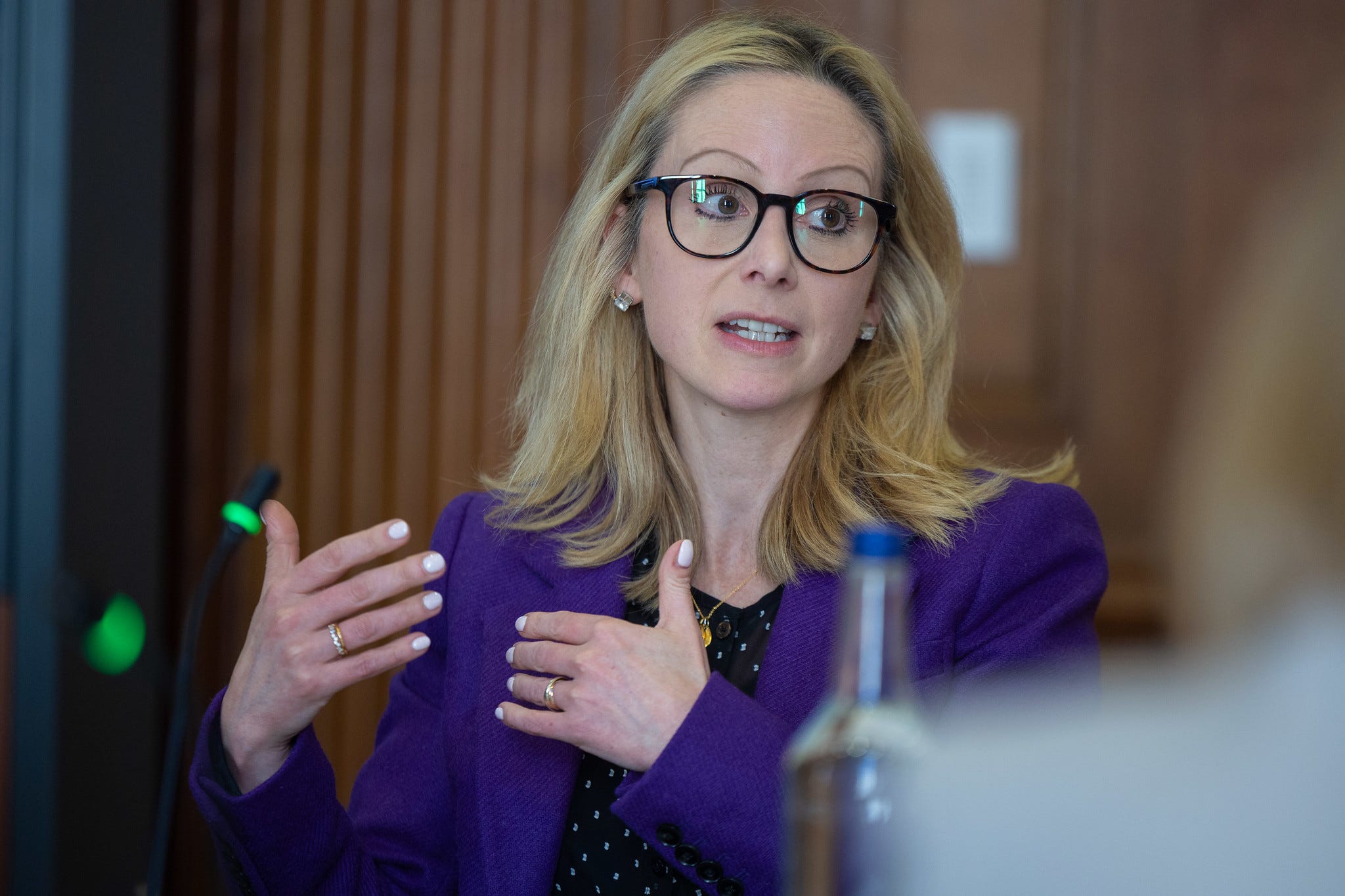
The new Chief Secretary to the Treasury, Lucy Rigby KC MP, has given a great interview in the FT. She talks knowledgably and enthusiastically about the need to embrace AI in public services. Lucy is a new intake MP from 2024 and the first to make it into the Cabinet.
I facilitated a business event with Lucy at the Labour Party conference a couple of years ago and was struck then by her knowledge and enthusiasm about AI.
New research strengthens AI as a stakeholder concept
The latest Ahrefs GEO research report is interesting for PR and communications. Its analysis of Google's AI mode and AI Overviews reveals just 13.7% overlap in cited URLs yet 86% of the time they reach the same conclusions.
This strengthens the AI as a stakeholder concept. It means AI is aggregating, weighting and synthesising signals from multiple sources in much the same way human stakeholders form opinions over time.
AI is modelling consensus. And consensus is one of our primary recommendations for treating AI as a stakeholder.
A simplistic SEO-led approach to generative engine optimisation (GEO) won't achieve this. You can't optimise your way into a single answer. Instead you need:
📍 Comprehensive stakeholder mapping to understand which sources contribute to that consensus.
📏 A rigorous audit of how your organisation is represented across those sources.
🤝 A sustained effort to influence multiple environments so that visibility and accuracy are consistent.
This is not about crude rankings. It is about representation which requires relationships. It also has implications for earned media strategy.
If AI systems reach similar conclusions from different source sets, then:
💥 A single high-profile hit is unlikely to shape outcomes on its own
🌐 Influence comes from consistent signals across a wide range of authoritative sources over time
That challenges some PR and comms people's fixation on the “big bang” campaign or the prestige placement.
Those still matter, but they are no longer sufficient.
Pope publishes important paper on AI
Pope Leo XIV has published Magnifica Humanitas, a 42,300-word encyclical on AI calling for “the safeguarding of the human person in the time of artificial intelligence”.
The encyclical is a formal, authoritative letter issued by the Pope to bishops on doctrine, ethics, or major social concerns. It is a highly important document in Catholic traditions and teachings.
In it the Pope reframes artificial intelligence not as a technical inevitability but as a moral and political choice, insisting that systems must be designed and governed around human dignity, work, and the common good rather than a “culture of power” concentrated in a few firms.
The document is well-balanced, rejecting both techno‑optimism and alarmism. It argues AI is neither inherently good nor evil but never neutral, because it reflects the values of those who build and finance it.
Early reception tells you as much about the moment as the text itself. Some in the tech community have welcomed its ethical framing while pushing back on implications for regulation and growth. Critics argue it does not go far enough. Others dismiss its concerns about labour and control as economically naïve.
It’s such a long document I haven’t read it in full. But from a skim, and using AI to ask it questions, my take is it tackles all of the right issues but doesn’t necessarily provide much insight into practically how organisations (or indeed governments) should tackle AI ethics and regulation.
Why should you think of GEO for AI like a map?
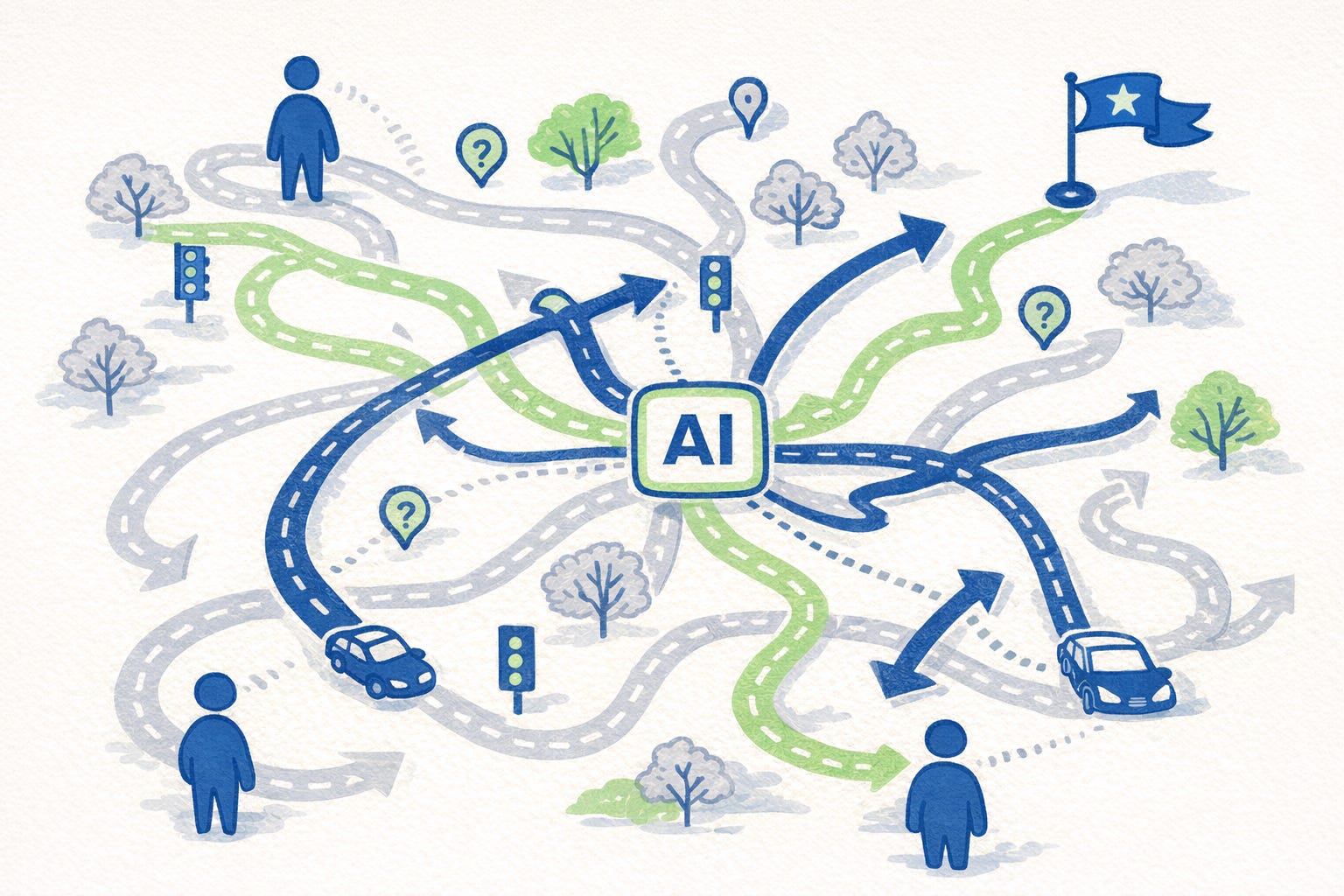
AI specialist Chris Penn has written a lengthy article where he argues that a map analogy is a better mental model for understanding AI for GEO. He takes a very long winding road to get there but it's a strong supporting argument for treating AI as a stakeholder.
Ask how to get to Boston and a map does not give you THE route. It offers multiple routes. Motorways. Back roads. Shortest, fastest, least congested. Which one you see depends on the map, the scale, and the rules guiding it.
Large language models behave the same way.
They build internal maps of concepts, sources and relationships. When asked a question, they navigate those maps and choose a route to an answer. Different users ask different questions. Different AI models have different maps. Different AI tools apply different rules.
That is why every model differs and every tool does things differently. The way your brand and reputation shows up is different depending on the model, the tool and the user. There is no single, stable answer. There are multiple plausible paths.
This is exactly why AI should be treated as a stakeholder.
Stakeholders interpret information through their own frames and incentives. AI does the same — systematically, at scale, and before any human is involved. GEO/AEO is true crude as it isn’t as simple as optimising for search It is an influential intermediary that shapes reputation.
PRCA launches Innovation Working Group supported by Purposeful Relations
The Public Relations and Communications Association (PRCA) has launched its Innovation Working Group, a practitioner-led body focused on helping the PR industry respond to the rapid growth of artificial intelligence.
The group is supported by Purposeful Relations, in our role as the PRCA’s first AI partner. It was established following the publication of the PRCA Innovation Charter, which highlighted key challenges facing the profession, including changing commercial models, measurement in AI-driven media environments, and the growing need for strategic AI expertise within communications. It includes practitioners from independent agencies, global networks, and consultancy businesses across the industry.
It has identified three initial workstreams: GenAI Visibility and Measurement; The Commercial Model Reset and The Prototype Lab.
I’m on the working group for Purposeful Relations and will be looking at all three workstreams, but primarily focusing on the the GenAI visibility and measurement stream.
Copilot AI continues to improve for PR and comms professionals
Improvements are coming to Microsoft 365 Copilot so fast it’s often hard to keep up. The latest is that Microsoft has changed the user interface. If your organisation has turned on the Frontier feature then these changes are live now. They will be rolled out to all users in July.
WorkIQ - the Work/Web tabs have gone and now there is a WorkIQ toggle that is on by default. This means Copilot is always grounded in your own emails and messages, as well as your files and your organisation’s files that you have permissions for.
This clearly signals the core benefit of Copilot in Microsoft 365 is its organisational context: documents, meetings, emails, chats, people are core to the experience rather than an optional layer. Copilot isn’t just a chatbot bolted onto Microsoft 365; it’s a contextual work interface.
AI model - next to the WorkIQ toggle there is a drop down menu for you to select the model. Most people will stick to the default ‘Auto’, but you can also choose Quick Response for an immediate answer or Think Deeper to get it to use chain-of-thought reasoning which is ideal for complex analysis, problem-solving, and nuanced questions. You can also use it to choose the latest Claude Opus model. Personally I’m a fan of Claude so choose this if I’m not doing something easy or straightforward.
Apps Waffle - Apps now sit behind a waffle icon in the left hand bar.
Prompt Gallery - The Prompt Gallery is available by clicking the ellipsis …. and is now called Prompt Lab. This is an odd change as it is its old name and the word ‘Lab’ is more likely to discourage people as it sounds experimental rather than choosing from a safer-sounding gallery. Your save prompts are still there, but team prompts have become shared prompts. This appears to be a retrograde step as the team tab was far easier to explain the importance of the whole team using AI instead of it just being an individual tool.
Floating Copilot icon - in apps like Word, PowerPoint and Excel the Copilot icon has moved from the tool bar to floating over a document in the bottom right. Hover over it and relevant prompt options appear. Click it and it opens the full prompt window sidebar. You can also right click it to dock it. Microsoft is about to add an option so you can put it back onto the tool bar.
Copilot Cowork to compete with Claude Cowork
Copilot Cowork is already available in Frontier mode. Cowork is an AI agent that completes activities on your behalf. For example, reading email responses to an invitation, updating the attendance list in Excel, filing the emails in the right Outlook folder and sending out replies. Cowork is “delegated assistance”: you give it a task, it carries it out, and then it stops.
Copilot Scout to compete with OpenClaw
Coming soon is Copilot Scout which is an “autopilot” that works towards an outcome over time, without needing to be prompted for each step. For example, you tell it to “keep track of how this project is progressing”: it checks documents and messages for updates, flags delays or gaps, pulls together a short status summary, and alerts you when something needs attention. Scout is “autonomous assistance”: you set the goal, and it keeps watch in the background. It is Microsoft’s response to OpenClaw, which will hopefully provide similar benefits but without the security risks.
CIPR publishes new guidance on AI and digital ethics for internal communications
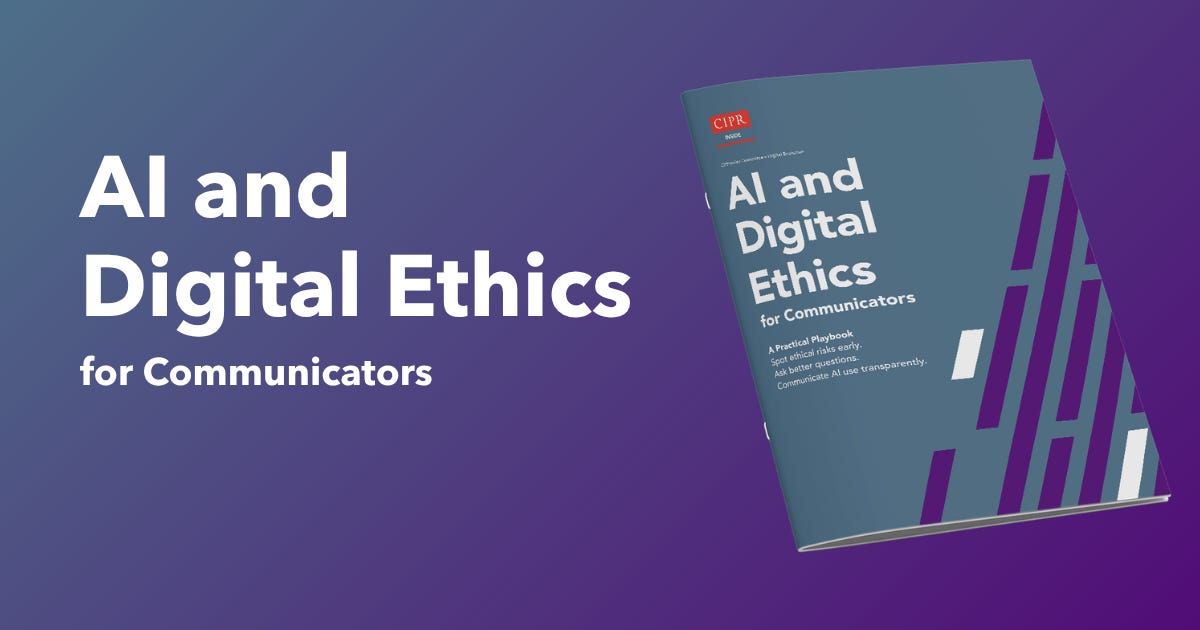
The Chartered Institute of Public Relations (CIPR) has published a new AI and Digital Ethics guide. It is a member-only practical resource for communications professionals, focused on the ethical use of artificial intelligence in internal communication.
It aims to help practitioners apply AI responsibly in day‑to‑day work by setting out:
Core ethical principles for using AI in communication practice
Five key roles for communicators: sense maker, trust steward, risk spotter, governance enabler, and change and capability enabler
Guidance on risk and governance, including privacy, security, transparency, and accountability
Practical prompts and considerations to support decision‑making rather than prescriptive rules
The guide is positioned as a working playbook, designed for selective use rather than linear reading, and forms part of CIPR’s wider professional development and ethics framework.
My favourite part is the five roles communicators play: sense maker, trust steward, risk spotter, governance enabler and change and capability enabler.